A few summers ago I watched my kids chase a bubble of sunlight across the lawn, then slip and slide on a patch of dry dirt that pretended to be a splash zone. It occurred to me that a proper water playground could live in our backyard without breaking the bank or turning the yard into a construction zone. You don’t need a fancy municipal grant or a custom-built concrete pad to give kids the wonder of a splash pad. What you need is a plan, a handful of versatile components, and the stubborn belief that a budget-friendly project can still feel like a small miracle.
I’ll walk you through how I built a DIY splash pad in a relatively ordinary suburban yard. You’ll hear the high points, the missteps, and the tricks that make this setup resilient, especially when a neighbor’s sprinkler system insists on joining the party. This is not a glossy showroom project. It’s a practical, durable water park at home that keeps kids active, curious, and safe. If you’re after homemade water park ideas that stay within reach, this is the path I’d choose again.
The idea behind a backyard splash pad on a budget is simple. Water should flow where kids can reach it, with enough splash to feel like a park, but not so much that cleanup or maintenance becomes a full-time job. The plan I settled on uses a mix of easy-to-source materials, common tools, and a couple of smart design choices that make the space feel bigger than its cost.
Right away you’ll notice a few guiding principles. First, the footprint matters. A splash pad should feel like a dedicated zone, not a narrow strip that barely qualifies as a water feature. We’re aiming for a soft, safe play area with a shallow layer of water and a few elements to spark imagination. Second, safety is non negotiable. Soft ground, non slip surfaces, and a simple drainage approach keep the fun from turning into frustration or injury. Finally, maintenance should be predictable. Quick hose connections, straightforward drainage, and accessible storage keep the project alive after a single weekend of construction.
Planning the space begins with honest measurements. I started by mapping the yard on paper, then translating those measurements to the actual space. You want a zone that’s large enough for several kids to play at once but not so sprawling that it sprawls out of control. For reference, a 15 by 20 foot zone works well for a family of four to six, while a smaller yard might top out around 12 by 12 feet. The real trick is to arrange features in a way that encourages movement without creating traffic jams of hoses and toys.
What makes a splash pad feel like more than a wet patch is the little design details that spark curiosity. I built mine around three core ideas: water flow, movable play objects, and shade. Water is the star, but you don’t want a single, heavy stream to dominate the scene. A modest spray pattern, a few gentle jets, and a couple of splash zones create a range of experiences. Movable play objects—soft foam floats, lightweight spray cups, and a few water toys—let kids change the scene without needing new equipment. Shade comes from a simple canopy or a pop up tent; it’s a small but mighty feature that makes the space usable during peak sun. Finally, a boundary system—low edging or a play fence—defines the area and helps with water containment.
The materials list for a budget splash pad is surprisingly approachable. You’re looking for common items you can source at a hardware store, a big box retailer, or secondhand if you’re patient. The emphasis is on compatibility with hoses and basic plumbing fittings so you can assemble and disassemble without specialized tools. The key is to keep things simple, modular, and easy to repair.
When you price out the project, you’ll likely be surprised by how much you can control the final number. A well-made splash pad can be kept under a few hundred dollars if you’re selective and reuse parts where possible. The biggest costs typically come from the splash features themselves and from the area’s surface preparation. If you’re handy with a saw or a drill, the savings jump considerably because you can repurpose leftover materials from other projects. If you’re worried about the upfront investment, think of this as a two-phase build: Phase One sets up the essential play area and basic water distribution. Phase Two adds features, more outlets, and extra textures if your budget allows.
One practical decision that made a big difference involved water distribution. I avoided a fixed, high-pressure system and instead integrated adjustable spray heads and a shallow, even flow that covers the pad without creating puddles. The challenge with any splash pad is to avoid tire-swinging water depth. Depth is the enemy of safety and the friend of maintenance because deeper water demands more frequent cleaning and can hide slip hazards. The approach I used struck a balance: a consistent 1 to 2 inches of water across most of the space, with a few slightly deeper pockets around spray jets to create playful “ponds” that kids could explore.
To install the water features with reliability, simplicity guided every decision. I used a standard garden hose with a T-splitter to create two feeding lines. One line powers a set of short spray jets arranged in a circular pattern around a central lawn area. The other line runs to a handful of spray cups and a gentle fountain feature at the edge. The fittings were basic: hose quick-connects, plastic elbows, a faucet adapter, and a quick-release valve for the fountain. The overall pipework is intentionally low, allowing easy storage when the season ends. If you’re concerned about winterization, this setup is friendly to a quick flush and a dry storage routine. You can drain the lines and store the nozzle heads in a labeled tote to minimize clutter.
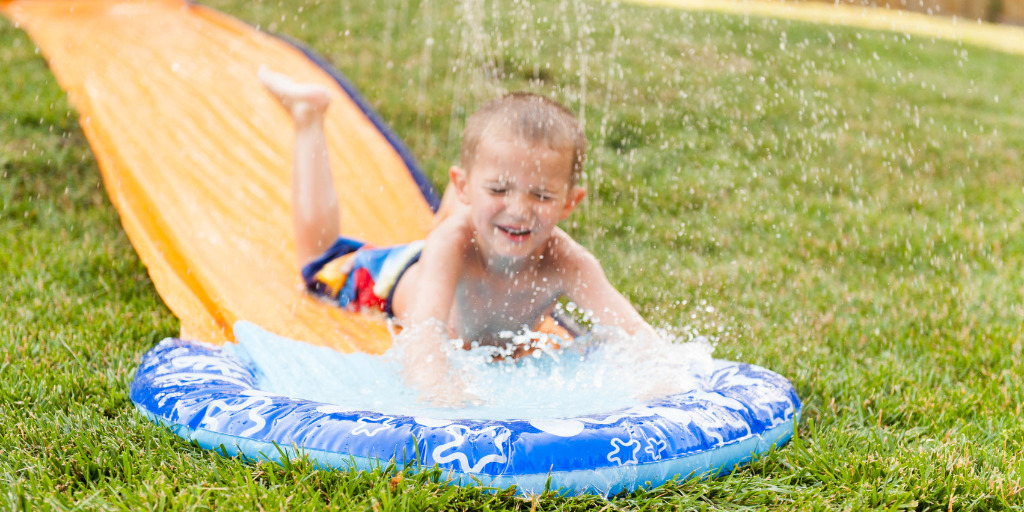
The surface you choose for the splash pad makes or breaks the experience. A soft material that’s forgiving to bare feet is worth its weight in safety margins. I opted for a ground cover that’s a mix between decorative artificial turf and a low-cost turf ground sheet. The turf offers a cushion when kids tumble during a run through the spray, and the ground sheet provides a smooth, even surface for tables, toys, and running shoes. The combination creates a zone that feels like a real playground without the expense or complexity of a fully paved space. For families with real dirt in the yard, the step to a soft layer can be as simple as laying down a couple of outdoor rugs and then anchoring them with pegs or landscape stakes to keep the area from shifting underfoot.
As for drainage, the best approach is to keep water contained long enough to keep play engaging, and then let gravity do the work. A gentle slope toward a vinyl collection tray or a shallow basin keeps the water contained. From there, a small siphon or a drain hose connects to the home drainage system or runs to a low spot in the yard where water can be absorbed naturally. The key is to avoid puddles that never quite dry, which can become slippery hazards as the sun bakes the surface. If you don’t have a built-in drain, you can also use a simple, removable sump pit that empties through a garden hose to a safe disposal point.
It bears repeating that safety is not an afterthought here. A splash pad should be a place where kids can be kids, but the ground must be forgiving and the water flow should never create a situation that invites panic or injury. For me, the most important safety steps are as follows: keep deep water out of the space, use non-slip surfaces, add a shade option, supervise actively, and keep the area free of clutter. It takes only a few minutes of mindful looking to see how quickly a space can become a hazard, and those few minutes can prevent a dozen near misses later in the season. I also recommend setting boundaries at the edge of the pad—temporary markers or a small rope line can suffice—to remind kids to stay within the purpose-built area.
But this project isn’t merely about safety and function; it’s about how a space invites kids to explore and make up stories. A splash pad offers countless small opportunities for imaginative play. The spray jets can become the rain that powers a pretend garden, the cups can release a chorus of rain sounds when tipped, and a shallow “pond” with floating toys becomes a miniature habitat for pretend fishermen. The beauty of a budget-friendly approach is that it invites continuous refinement. A feature that seems perfect on day one may be repurposed mid-summer as kids’ interests shift. A simple removable wand for spray height, a floating ball that glides across a shallow stream, or a set of water buckets that empty in a broad arc adds a spark of novelty without bloating the budget.
A project like this also changes how you relate to time in the yard. It’s not a single weekend endeavor; it’s a living space that grows with you. You may discover that you want to expand the pad into a larger play zone, or you might find that certain elements are overkill for your family’s rhythm. The adaptability of the design matters more than the initial footprint. You’ll learn which hours of sun to avoid, which materials hold up to UV exposure, and what lightweight toys stay ready to go at a moment’s notice.
The health of your lawn and garden deserves a gentle touch as well. A splash pad can be surprisingly kind to a well-tended yard if you balance water usage and soil care. If you’re watering the rest of the yard, you’ll need to schedule the pad’s water usage to avoid over-saturation. You might consider a timer that controls the water flow or a rain sensor connected to a simple irrigation controller. In one of my early trials, I found that running the splash pad during the hottest part of the day would evaporate most of the water before it could do any good. Shading the pad and running water in short bursts proved far more efficient and ultimately more enjoyable for kids who couldn’t tolerate the heat.
Over the years, the project has become more than a scrappy weekend build. It’s grown into a reliable, kid-tested space that still satisfies adults looking for a quick, low-maintenance backyard retreat. The best part is watching how quickly children switch into play mode when water appears. They invite their friends, devise games that require collaboration, and learn about sharing space in a way that feels organic and fun. The first time we hosted a neighborhood gathering, several families asked for a tour of the pad. It wasn’t because of fancy features or expensive kits; it was the sense that the space was alive with possibility.
If you’re contemplating a similar path, you’ll probably want a practical roadmap. Here’s a candid, experience-backed sequence that protects your time and your budget.
First, decide on the core footprint that makes sense for your yard. Don’t chase a picture-perfect rectangle if it means you’ll lose sense of the rest of your outdoor space. Instead, map out a flexible, L-shaped or even rounded pad that tucks into a corner and leaves room for furniture and a play lawn for other activities. The pad should be clearly defined but not isolated from the rest of the yard. A gentle transition from turf to the splash surface helps everyone feel like they’re entering a legitimate play zone rather than stepping into a temporary water mess.
Second, pick a water distribution strategy that you can repair without a trip to the hardware store every weekend. I used a basic hose splitter that feeds a pair of lines. The more lines you cap, the more variety you can introduce, but more lines also means more family water park ideas potential leaks and more places to shut off water when you’re done. Start with two lines and two or three spray options. If you love the set-up after a season, you can always expand with more heads, a few decorative nozzles, or an adjustable spray wand.
Third, invest in a dependable surface with a soft feel and good drainage. The combination I described works well in many backyards. If you have a different substrate or unyielding soil, you can adapt by adding a layer of outdoor carpet or a synthetic turf runner to protect feet while keeping water from pooling in places that aren’t designed to hold it. The goal is to create a surface that dries quickly after play and remains inviting for kids to walk, run, and crawl.
Fourth, keep the maintenance minimal but consistent. A once-a-week wipe-down to remove leaves and debris, a quick check of hose connections, and a monthly inspection of the drainage area go a long way. If you’re lucky, you’ll never have to disassemble more than a few parts to deal with a clog or hang a leaky joint. The simplest, most reliable systems are the ones you barely notice—until you do.
Fifth, keep your expectations realistic. A DIY splash pad never quite looks like a professionally installed water park. It’s a family space built from elbow grease, a little ingenuity, and plenty of hands-on play. The joy isn’t necessarily in the equipment, but in the way the space invites kids to test, revise, and imagine.
For families who want to maximize the impact without adding complexity, I suggest focusing on three sensory layers: water, touch, and motion. Water creates the core thrill—spray, mist, and a soft fountain. Touch comes from a mix of textures, such as the soft turf, smooth plastic cups, and the gentle spray from different angles. Motion is the playing field’s heartbeat, with kids running, chasing, and changing the direction of spray with a flick of the wrist. The more you honor these three layers, the less you’ll feel compelled to chase new gadgets or expensive add-ons.
I’ve learned a few practical lessons along the way that aren’t obvious at first glance. One is that a splash pad benefits from a clear flow path for water. If you can rotate spray only in one quadrant, you’ll have less splashing all over the yard and a more predictable water footprint. Another lesson is to invest in a few multipurpose valves. A simple ball valve or a T valve gives you immediate control over water direction and splashing intensity, which is incredibly helpful when you’re trying to tailor play to multiple age groups. And finally, don’t underestimate the social dimension. The pad works best when it’s a magnet for neighborhood kids and a point of connection for families. A simple, durable setup becomes a social hub in the heat of summer.
Whether you’re a weekend handyman or a parent with a knack for improvisation, a DIY splash pad is within reach. The essence of the project is not in the most technically advanced solution, but in the willingness to test, adjust, and enjoy the bursts of laughter that follow a good splash. The kids will remember the laughter more vividly than the exact configuration of the water jets, but a thoughtful layout and sturdy materials will help ensure that your memory stays positive long after the last pool toy has drifted away.
Two practical checklists to guide your planning and safety. Use them as anchors as you move through the build.
What you’ll need to start (five core items)
- A hose splitter and a couple of quick-connect hoses A small collection of spray heads and a gentle fountain component Soft ground cover, such as low-cost turf or outdoor rugs A shallow drainage tray or basin with a drain hose Basic tools like a utility knife, scissors, and a drill with appropriate bits
Safety and maintenance reminders (five practical items)
- Keep water depth to about 1 to 2 inches across the main play areas Use non slip surfaces and keep the edge of the pad clearly defined Supervise children at all times; set rules for running or rough play Drain and dry the area at the end of the day to prevent mold or mildew Store hoses, heads, and accessories in a labeled tote for easy winterization
This project isn’t about pretending to be an otherworldly designer. It’s about turning a familiar patch of yard into a space where kids can be kids, where the scent of wet grass and the sound of spraying water become a routine of summer. It’s about the patience to assemble, adjust, and maintain a system that truly works for your family. It’s about showing up with a plan a budget can support, and then letting the space evolve as your children grow and their interests shift.
If you’re reading this and thinking about a DIY splash pad for your own yard, here’s a final note of encouragement from someone who has lived with the process for several summers. Start with the basics, then let your yard teach you how to improve. The thrill of a splash that lands just right, a cup that tilts and releases a perfect trickle, and a group of kids that gather around a fountain and decide to turn it into a story you’ll remember long after the water has dried off your ankles—that is the essence of a backyard water park on a budget. It’s not that you must spend a fortune to create something beautiful; it’s that you must be willing to invest a little time, a little imagination, and a lot of shared play.
My own experience with the DIY splash pad has become a seasonal ritual. Each spring, I plan the adjustments I’ll make, and each autumn I store away the pieces, knowing that a similar arrangement awaits when warm days return. The pads, the hoses, and the shallow water are not just features of a backyard, they are catalysts for moments that linger in memory: the squeal of a child who discovers a new spray angle, the calm of an adult watching a long afternoon drift by, the quiet relief of a yard that has found its rhythm again.
If you’re chasing a “homemade splash pad” ethos, you’ll appreciate that the value is in the experience more than the construction. The real win comes when the space invites play and awakens a sense of community. That is the core of the budget-friendly water park at home. A splash pad isn’t about competing with professional installations; it’s about celebrating small, accessible joys that turn ordinary summers into something remarkable.
And if you’re curious about the broader category, this approach scales with your needs. You might begin with a compact pad as a starter project and gradually expand into a larger play area with added features. You could swap a few spray heads for misting fans or weave in a DIY water cannon that shoots water toward a painted target. The path is not a fixed route but a green lit invitation to tinker and enjoy.
As the season turns and the sun slides lower in the sky, the splash pad remains a constant soundtrack of laughter, splashes, and the soft thud of a ball that bounces on the damp turf. It’s a space that rewards care, not complexity. It’s a space that invites more time outdoors, more shared meals on a warm evening, and more opportunities for kids to run free and fearless, if only for a few hours.
If this kind of project speaks to your family, I encourage you to start with a concrete plan, gather your materials, and commit to a weekend of hands-on work. You won’t regret the effort when you see the first kid who doubles over with laughter after a circular spray arc lands exactly where they need it. You’ll know you did something meaningful not because you produced a glossy feature, but because you created a place where childhood can unfold with water, air, and a little bit of sunshine. And that, in the end, is what makes a backyard water park worth the effort.
46 Zorn Blvd suite a, Yaphank, NY 11980 United States